TL;DR
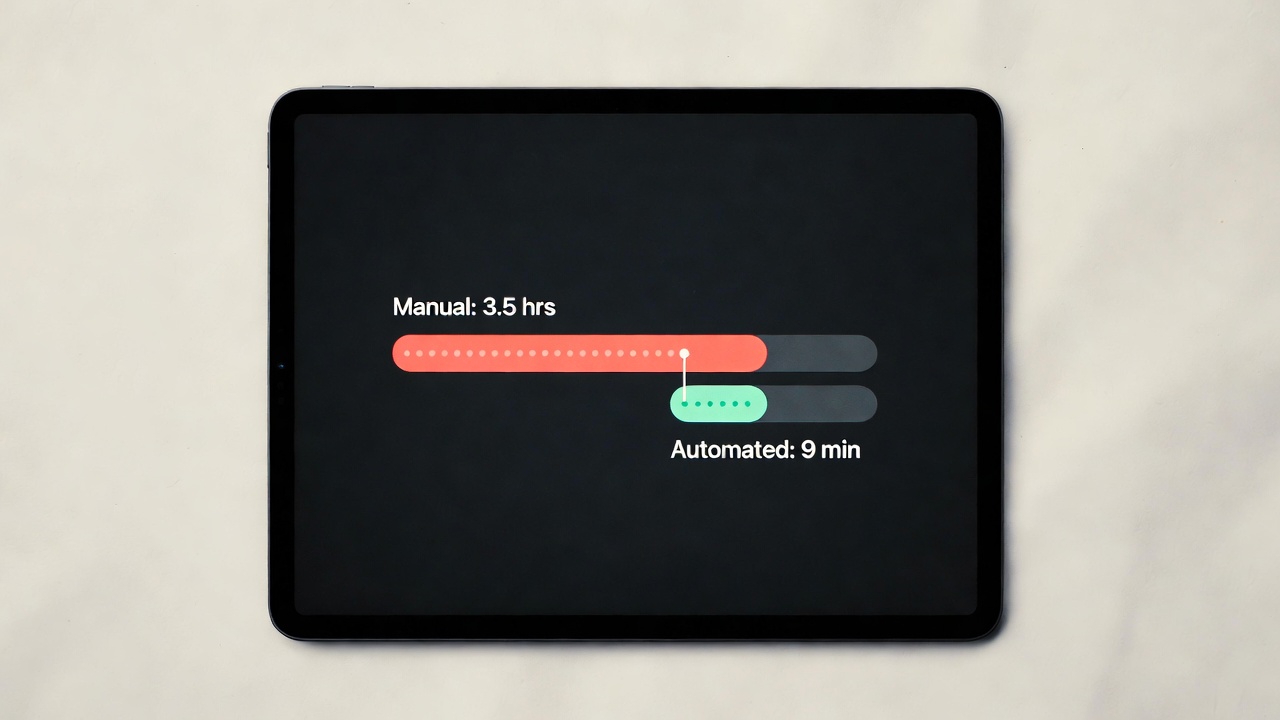
14 days is enough to ship a real, production-ready MVP — if you treat scope as the enemy. The formula is: 2 days of structured discovery, 2 days of design, 6 days of focused build, 4 days of testing and launch. The tech stack matters less than the discipline. Here's exactly what we do, and why it works.
In This Article
The 6-Month Myth Is Costing You Real Money
The average software agency quotes 4–6 months for an MVP. That timeline is a feature, not a bug — from their perspective. Longer timelines mean more billable hours, more "discovery phases," more revision cycles. For the founder, it means $80,000–$200,000 spent before a single real user has touched the product.
We've seen founders burn their entire pre-seed allocation on an MVP that launched 8 months late, by which point their thesis had shifted anyway. The product they built was the product they imagined on Day 1 — not the product the market was asking for on Day 240.
The alternative isn't reckless cutting. It's surgical scoping. There is a meaningful difference between what a product needs to work and what a product should eventually do. 14-day MVPs are built around the former, ruthlessly.
What an MVP Actually Is (and Isn't)
An MVP is not a prototype. It's not a mockup. It's not a "coming soon" page. A minimum viable product is a functional, production-deployed product that solves one problem completely for a defined set of users, and nothing else.
The "minimum" in MVP is about features, not quality. Your MVP should:
- Work reliably — no embarrassing crashes in front of real users
- Solve the core problem end-to-end — no "we'll add the checkout next sprint"
- Be deployable to real users immediately after launch
- Include just enough authentication and data persistence to be useful
What it doesn't need: admin dashboards, elaborate analytics, a blog, a mobile app, an API, or settings pages. Those come after you've proven the core is worth building.
Days 1–2: Discovery
The discovery phase is the most undervalued part of rapid development. Founders often want to skip straight to design. The ones who do almost always rebuild significant portions of their product in week 2 because they discover an assumption was wrong.
Day 1: The Problem Definition Workshop
We run a structured 3-hour session with the founding team. The output is a single document answering:
- Who is the primary user? One persona. Not "SMBs" — "operations managers at 10–50 person e-commerce businesses"
- What is the one job they're hiring this product to do? One job. If you list three, pick the most painful one
- What does success look like for them? What specific outcome tells them the product worked?
- What's the riskiest assumption? What would have to be true for this to succeed, and how confident are you?
Day 2: User Flow Mapping and Scope Lock
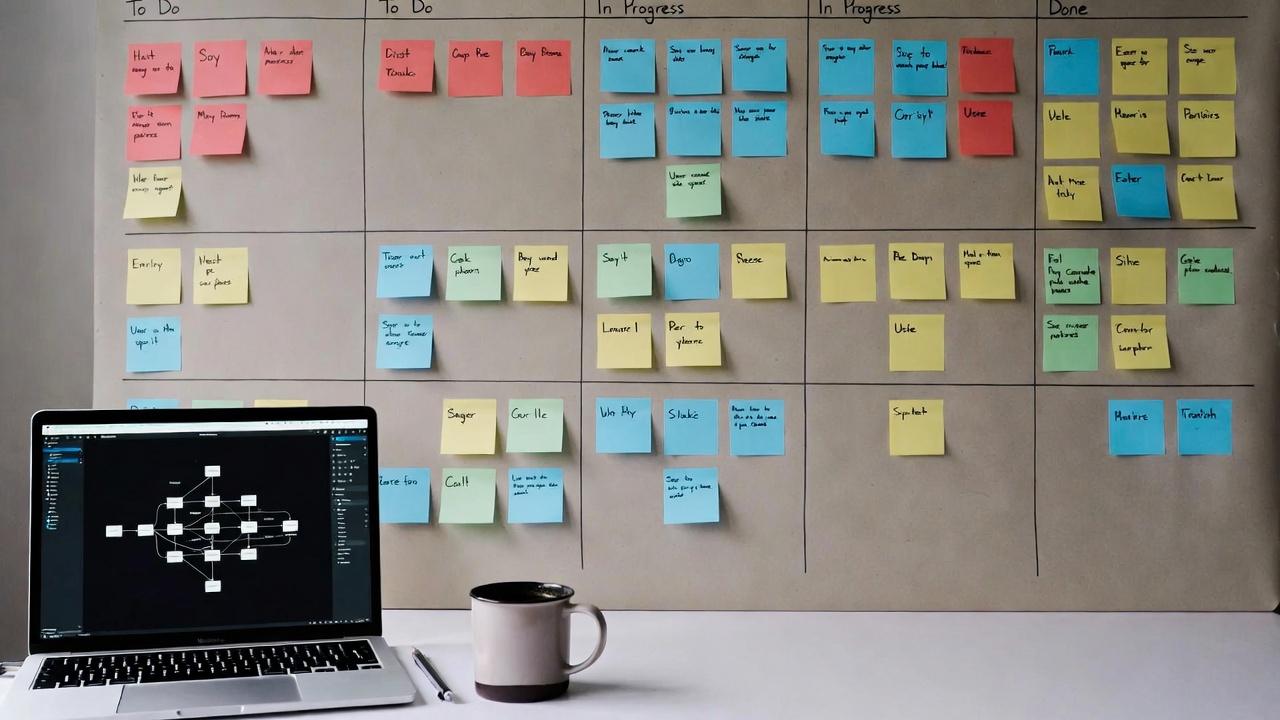
Map the primary user journey as a text-based flow — no design tools yet. Every screen, every action, every decision point. Then go through it with a red pen and cross out everything that isn't strictly necessary for the user to complete their core job.
At the end of Day 2, you have a signed scope lock document. Nothing gets added after this point without explicitly removing something else. This rule, enforced without exceptions, is what makes 14 days possible.
Days 3–4: Design
Two days for design sounds impossibly short. It works because discovery produced a precise user flow, which means there's nothing to design your way into — only a solution to design your way through.
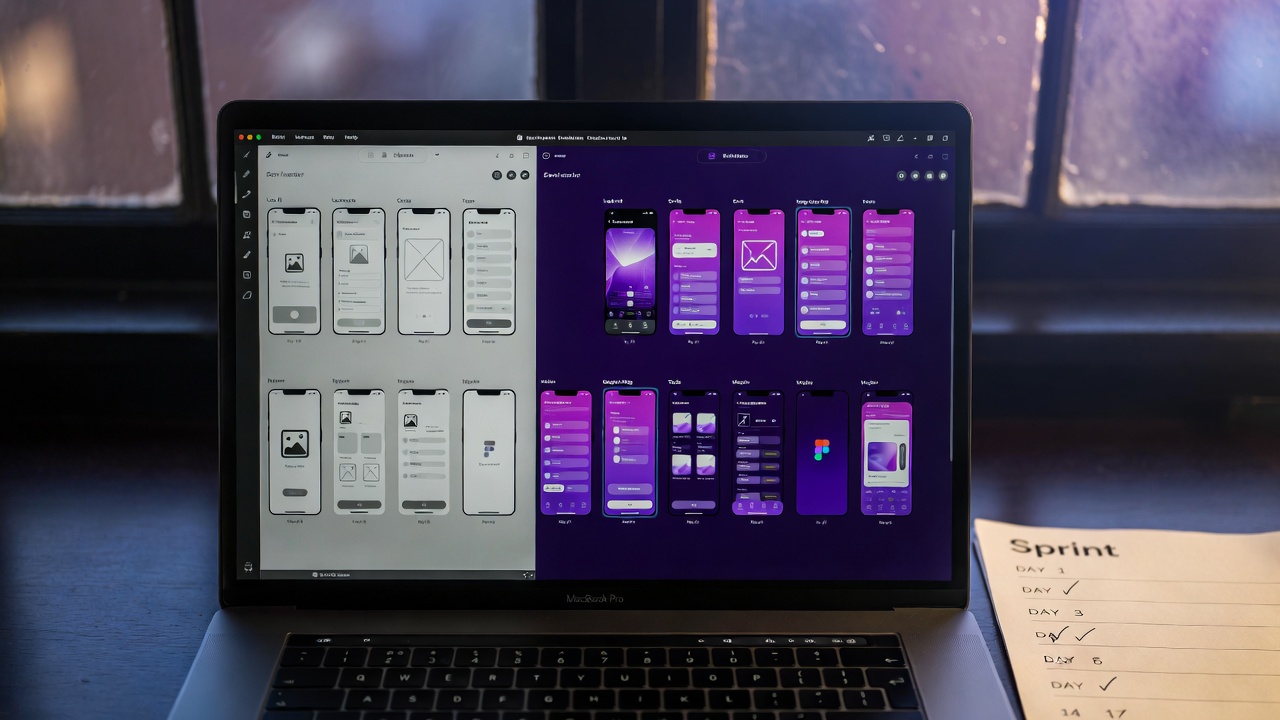
Day 3: Wireframes in Figma
Low-fidelity wireframes for every screen identified in the user flow. No colours, no fonts, no branding. Pure layout and information hierarchy. The goal is to validate that the flow makes sense and catch any logic errors before building.
Share these with 3–5 target users via a Figma prototype link. Ask them to complete the primary task while thinking out loud. Watch for confusion. Fix what's confusing. Do not add features based on what users want — only fix what users can't do.
Day 4: High-Fidelity Design and Component Library
Apply brand — colours, typography, component styles — to the validated wireframes. We use an existing design system (Radix UI or Shadcn/UI mapped to Figma) to dramatically accelerate this. The output is a complete, developer-ready design file. No redlines needed — components are built to a shared system that engineers already know.
Need a product shipped in 14 days?
We've done this over 30 times. Discovery, design, build, launch — the complete playbook applied to your idea.
Days 5–10: Build
Six focused build days. The team is 2–3 engineers maximum. More people at this stage creates coordination overhead that costs more time than it saves.
Day 5: Infrastructure and Skeleton
Spin up the project: repository, CI/CD pipeline, environment configuration, database schema, authentication. We use Vercel for deployment, Supabase for database and auth, and Next.js for the application framework — this combination gives us a production-ready environment in under 4 hours. The rest of the day is spent building the application skeleton: routing, layout, navigation.
Days 6–9: Core Features
Implement the user journey screen by screen, in order. Never work on a screen that comes after an incomplete screen upstream. If the onboarding isn't working, you don't start building the dashboard. This ensures you always have a working, demonstrable product — you never have a pile of half-finished features.
Daily standup: 15 minutes. Three questions — what shipped yesterday, what's shipping today, what's blocked. Blockers get resolved within 2 hours or get escalated immediately. Nothing waits for a "weekly sync."
Day 10: Polish and Bug Triage
Feature freeze. No new features added — only bug fixes, performance improvements, and polish. Run the complete user flow end-to-end 10 times and log every friction point. Fix the ones that break the flow. Defer the ones that are merely annoying.
Days 11–14: Test and Launch
Days 11–12: Beta with 5–10 Real Users
Invite 5–10 target users who have been pre-briefed that this is an early product. Give them no instructions — observe what they do. Record sessions (with permission) using a tool like Hotjar. Watch for places where they pause, click in the wrong place, or give up. Fix those.
Do not ask users what features they want. Ask them about the problems they have. You're validating the core, not collecting a feature backlog.
Days 13–14: Launch
Configure monitoring (Sentry for errors, PostHog for analytics), write the first user documentation (a 5-minute getting started guide), and launch. "Launch" means: the product is publicly accessible, you've sent it to your waiting list or target users, and you're actively monitoring for errors.
The goal by end of Day 14 is real users doing real things in production. Everything else is secondary.
Tech Stack Choices That Enable Speed
Stack choices are a major speed lever. The wrong stack — chosen for theoretical scalability rather than build velocity — can add 3–4 weeks to an MVP timeline.
Our default stack for web products:
- Framework: Next.js 14 (App Router) — full-stack, fast to build, excellent ecosystem
- Database + Auth: Supabase — PostgreSQL, row-level security, built-in auth, generous free tier
- UI Components: Shadcn/UI — copy-paste components that look production-ready immediately
- Deployment: Vercel — zero-config deployments, preview environments, edge network
- Payments: Stripe — 2-hour integration for a complete checkout flow
- Email: Resend — transactional email with React Email templates
For AI-heavy products, add: OpenAI or Anthropic SDK, Pinecone or Upstash Vector for retrieval, and Langchain or Vercel AI SDK for orchestration.
The key rule: use managed services for everything that isn't your core product. You are not in the business of managing Postgres infrastructure or building auth systems. Supabase and Vercel handle that so you can focus on the 20% that is actually your product.
Scope Control: The Only Real 14-Day Constraint
Every 14-day project that fails fails for the same reason: scope expansion. A feature that "takes 30 minutes" gets added on Day 7. Then another. Then another. By Day 10 you're 3 days behind and the launch date slips to "end of next week."
Our rules for scope control:
- The parking lot — all feature ideas that arise during the build go into a documented parking lot, not the sprint. They're real, they're valid, they'll be prioritised after launch — just not now
- The 30-minute rule — if a task takes more than 30 minutes longer than estimated, it either gets simplified or cut. It never silently absorbs more time
- The daily demo — at the end of each build day, demo the product in its current state. This keeps the team honest and gives stakeholders visibility without generating feedback loops
- The "would you pay for it without this?" test — if a proposed feature is something users would still pay for the product without, it's post-launch
Scope control isn't about building less. It's about building the right less — the version that tests your most important hypothesis with the highest fidelity, as quickly as possible.
FAQs
Can a 14-day MVP handle real user scale?
For most early-stage products, yes. Supabase handles thousands of concurrent users on its free tier. Vercel's edge network handles traffic spikes automatically. The ceiling you'll hit is usually on the application logic, not the infrastructure — and you won't hit it at the user numbers that matter for an MVP. If you expect immediate high scale (tens of thousands of concurrent users from day one), that's a different problem and requires a different solution.
What types of products are unsuitable for this approach?
Highly regulated products (medical devices, financial trading systems, insurance underwriting) where compliance requirements extend timelines regardless of build speed. Also hardware products, or products that require physical infrastructure. For anything software-first and web-delivered, 14 days is achievable with the right approach and team.
What does a 14-day MVP engagement with LoopSuit cost?
Pricing varies by complexity, but the range for a standard web MVP is $12,000–$28,000 CAD. This includes discovery, design, build, QA, deployment, and a 30-day post-launch support window. Compare that to 6 months of agency work at $15,000–$25,000/month — and consider that you get real user feedback in 2 weeks rather than 6 months. Book a call and we'll give you a precise scope and price within 24 hours.
What if we need to pivot after launch?
That's the point. Launching in 14 days means you learn what needs to change in week 3 rather than month 7. We build with extensibility in mind — the codebase is clean, well-documented, and structured for rapid iteration. Pivots at the MVP stage are features, not failures. The faster you launch, the faster you know.